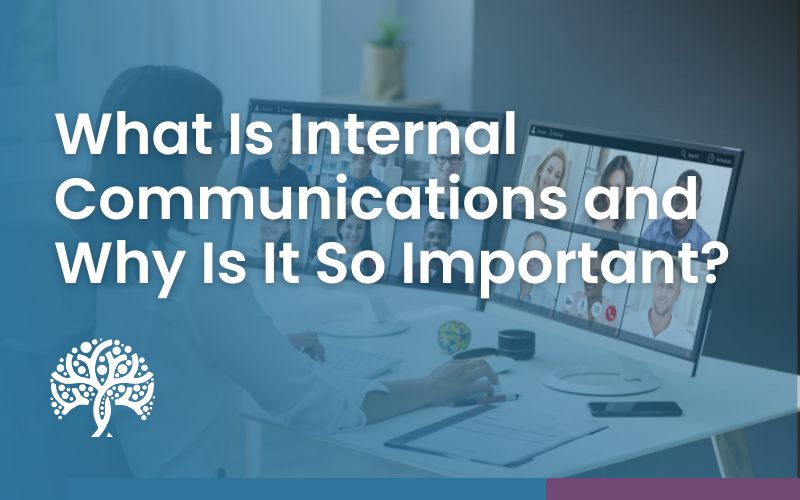
Internal communications used to be seen as a support function. A way to distribute updates, publish newsletters and ensure announcements reached the right inbox. That version of internal communications no longer reflects reality. Today, organisations are operating in environments defined by constant change. Artificial intelligence is reshaping workflows. Hybrid working has altered how teams connect. Growth, restructuring and digital transformation have become normal rather than exceptional.
In that context, internal communications is no longer about sending information. It is about helping people make sense of change.
From Broadcasting to Meaning-Making
One of the most significant shifts in internal comms strategy is the move away from broadcasting and towards interpretation. Employees do not simply want to know what is happening. They want to understand:
- Why it is happening
- How it affects them
- What it means for their role
- Where the organisation is heading
Without context, communication becomes noise. With context, it becomes alignment.
Modern internal communications sits at the centre of this meaning-making process. It translates strategy into something tangible and human.
The Human Side of Organisational Change
Change rarely feels neutral to employees. Even positive transformation can create uncertainty. When new technology is introduced, when departments restructure, when leadership shifts direction, employees instinctively ask personal questions. Is my role secure? Will expectations change? Do I still belong here? If those questions are not acknowledged, trust begins to erode.
Internal communications plays a critical role in bridging that gap. It ensures that organisational strategy is not presented as a distant corporate narrative, but as something employees can understand and engage with.
This is particularly important in 2026, where AI adoption and digital acceleration are reshaping the workplace at speed.
Hybrid Work Has Raised the Stakes
The move to hybrid and remote working has amplified the importance of internal communications. In a traditional office, culture was reinforced through physical presence. Leaders were visible. Informal conversations helped clarify uncertainty.
In dispersed environments, communication must work harder.
Visibility, clarity and consistency cannot rely on proximity. They must be designed intentionally.
Internal communications therefore becomes the connective tissue of the organisation. It ensures that employees in different locations, functions and levels experience the same strategic direction and cultural signals.
The Link Between Communication and Engagement
There is a direct relationship between how well people understand organisational direction and how engaged they feel. When communication is clear and consistent, employees are more likely to:
- Feel aligned with organisational goals
- Trust leadership
- Contribute ideas
- Navigate change confidently
When communication is fragmented or overly reactive, engagement suffers.
In that sense, internal communications is not simply about messaging. It is about performance.
As internal communications continues to evolve from operational messaging to strategic influence, organisations need professionals who can shape culture, guide change and support leadership at the highest level.
Find out more about our CIPR Specialist Diploma in Internal Communications and how it can support your next stage of development.